- No Comments
- Education
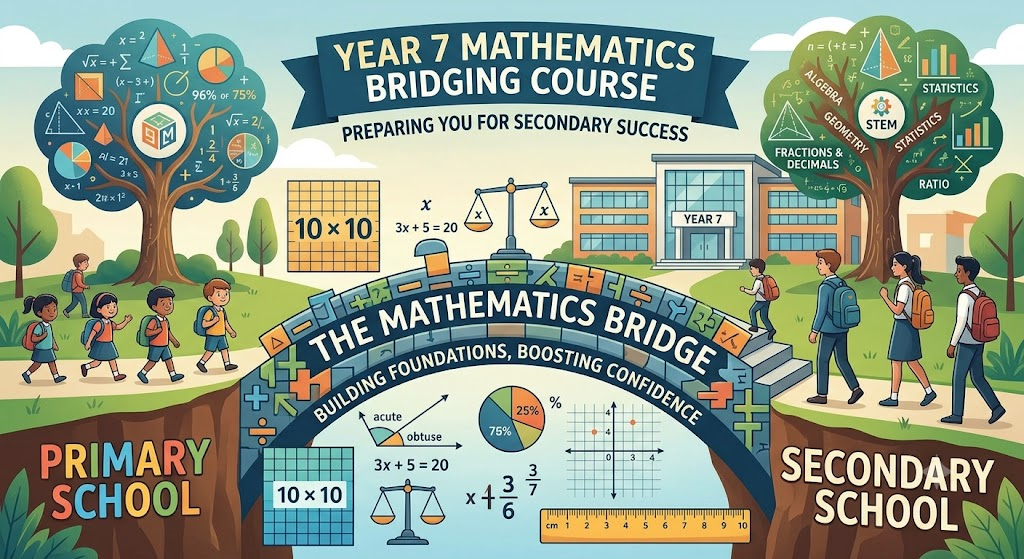
Preparing for a Year 7 bridging class—the transition from from primary school (Key Stage 2) to secondary school (Key Stage 3)—involves upgrading core academic skills, organizing new supplies, and building mental resilience to handle multiple subjects and a larger campus.
How to prepare for A Smooth year 7 bridging
Preparing for a Year 7 bridging class in the UK involves securing your foundational Key Stage 2 knowledge, familiarizing yourself with new secondary school routines, and building independence. The most effective approach is combining academic readiness with practical and organizational habits.
Preparing for this step requires a targeted approach:
1. Academic Preparation
- Strengthen KS2 Basics: The jump to secondary school requires a solid grasp of basic literacy and numeracy. Ensure you have mastered fractions, decimals, percentages, and basic algebra for Maths, as well as reading comprehension and spelling in English.
- Use Targeted Revision Guides: Utilize Key Stage 3 (KS3) learning resources like Enrichment Lessons to practice new topic reviews and tests before classes begin.
- Pre-Read Key Topics: Look up early KS3 curriculum guidelines online to get a head start on what will be taught in the first term, particularly in Mathematics, English, and Science.
- Mathematics: Move beyond basic arithmetic and build fluency in place value, fractions, decimals, and beginning algebra. You can use the Curriculum Bridging Project for targeted KS2 to KS3 resources.
- English: Focus on reading comprehension and essay structure. Encourage reading diverse texts and summarizing them to build a strong vocabulary and critical thinking.
2. Practical & Organizational Skills
- Master Your Timetable: Unlike primary school where you stay in one classroom, secondary school requires moving to different rooms for different subjects. Practice reading a mock timetable to know exactly what books and equipment you need for the day.
- Active Homework Management: Set up a designated “homework station” at home and make it a habit to check off assignments on the day they are assigned rather than rushing to complete them at the last minute.
- Get the Right Kit: Double-check your school’s uniform and equipment list. Purchase clear, durable plastic popper folders—one for each subject—to keep your handouts organized.
3. Independence and Mindset
- Learn to Travel Independently: If you will be taking public transport (like the bus or train) or walking to the new school, practice the route a few times over the summer to figure out exactly how long it takes.
- Develop Self-Advocacy: Practice speaking up and asking for help. In a larger secondary school, you will be expected to identify when you don’t understand a topic and ask the teacher or a peer for clarification.
4. Prepare Your School Gear & Travel
- Label Everything: Secondary school means moving between rooms and lockers. Label your uniform, PE kits, and stationery to prevent losing items.
- Plan Your Route: If attending a school in a place a bit farther from your home, practice the commute ahead of time so you are confident with public transport or walking times.
- Organize Your Bag: Use a folder system with separate labeled popper wallets or dividers for different subjects so you are not carrying all of your notebooks at once.
5. Adapt to New Routines
- Multiple Teachers: Unlike primary school where you spend all day with one teacher, Year 7 means a different teacher for every subject. Keep a copy of your timetable on your phone or in your diary so you know exactly where to go.
- Homework Management: The workload will be higher. Try setting a routine where you complete homework as soon as you arrive home to keep your evenings free for relaxation.
Here is a direct link to the best practice materials and learning resources. For more advice on getting ready for the jump to secondary school, don’t hesitate to contact us via the contact us page.
Share:
More Posts
How to Terminate Your Account
March 21, 2026

5 Ways to Master Algebra Fast For GCSE Exams
March 19, 2026
What is GCSE Chemistry? Student Overview
March 19, 2026